
Tässje
Local roots. Digital possibilities.
A local business. A new chapter.
Not every digital transformation begins with a technology.
Sometimes, it begins with a conversation.
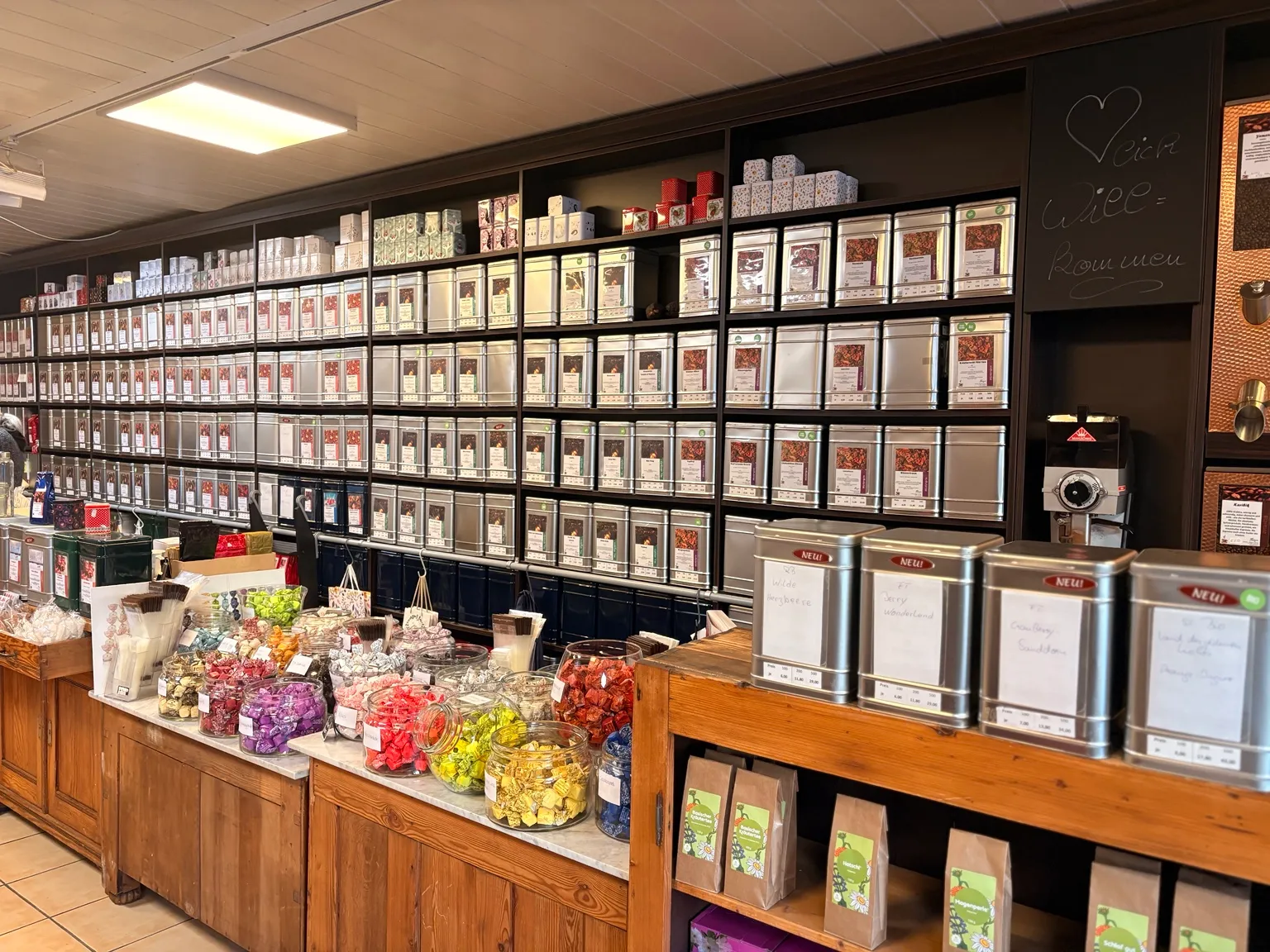
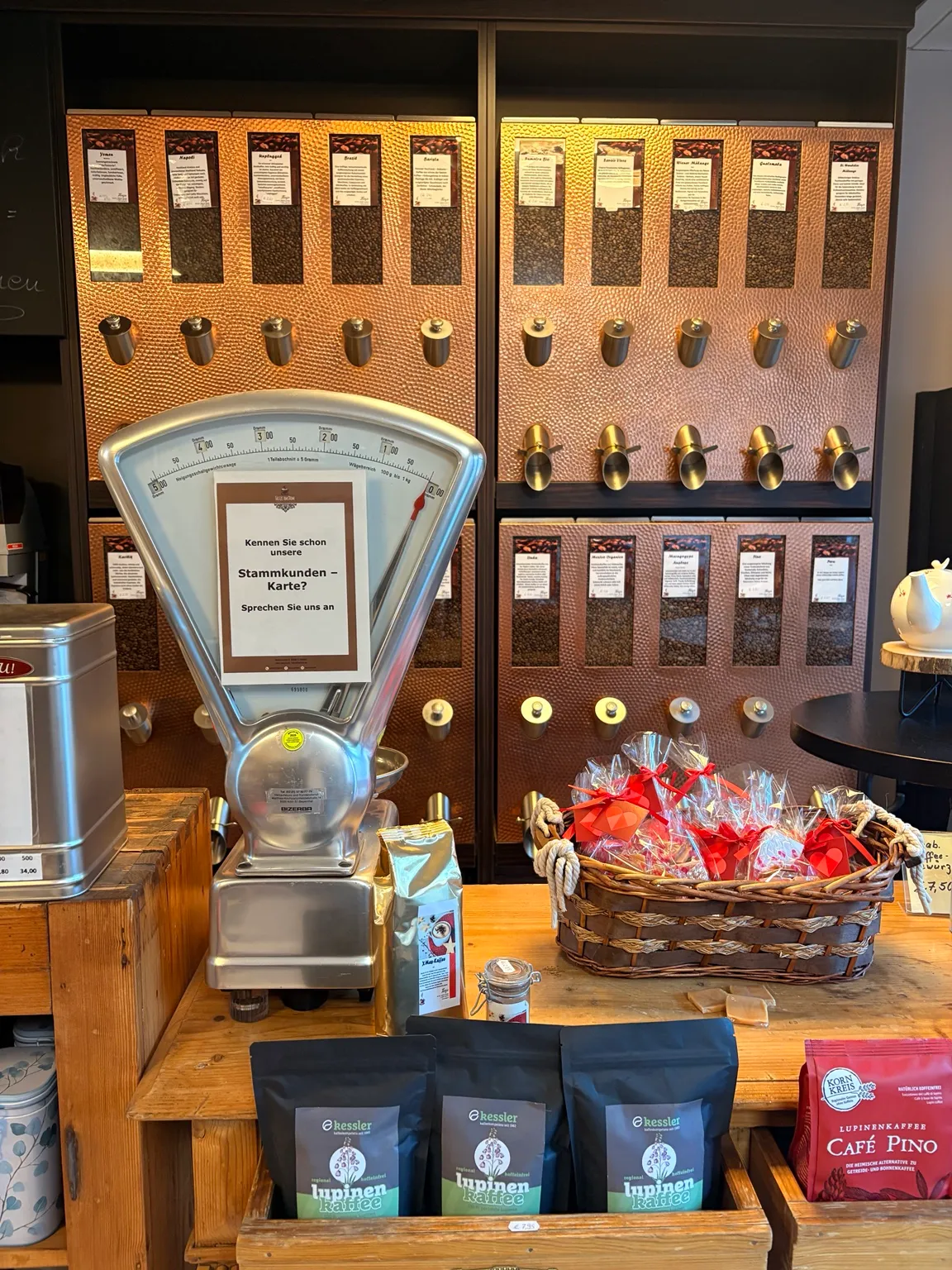
Tässje is a local tea and coffee shop with its own character. Shelves filled with tea, coffee beans stored in traditional dispensers, wooden furniture and products selected with care.
It is a place where shopping is still a personal experience.
When I began working on Tässje, the challenge was not simply to create another online shop. It was to understand how an existing business works and how technology could support it without changing what makes it special.
A digital storefront should not replace the physical shop. It should extend its possibilities.
Technology should strengthen what already makes a business unique.
For me, this meant starting with the people, the products and the processes rather than with a predefined technical solution.
The software needed to adapt to the business.
Not the other way around.
More than a storefront.
Selling tea and coffee online sounds relatively straightforward.
Until you begin to understand the details.
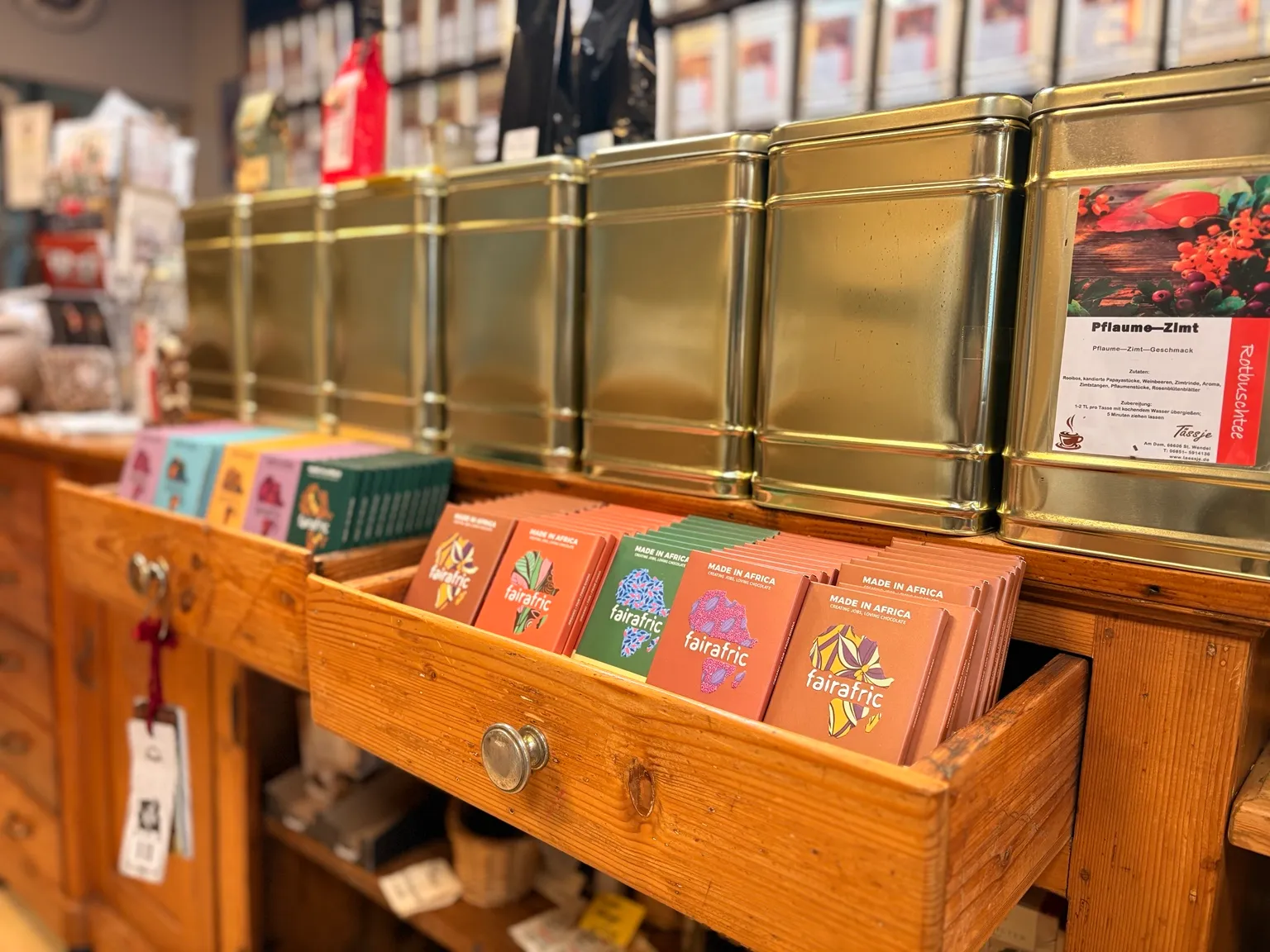
Products are available in different quantities. Prices depend on weight. Ingredients, preparation instructions and product information need to be represented accurately. Supplier catalogues change, while the retailer’s own decisions about assortment and pricing need to remain independent.
Behind every product is a series of decisions.
Understanding the business
Before choosing an architecture, I needed to understand the relationship between the physical shop and its digital counterpart.
How are products selected?
How are prices determined?
How should orders be prepared, accepted and fulfilled?
Which processes benefit from automation, and which should remain under human control?
These questions shaped the technical requirements more than any particular framework or technology.
Keeping complexity in perspective
A small business does not necessarily need the same systems as a large retailer.
It needs reliable tools that fit its daily operations, its resources and its ambitions.
The right solution is not always the most comprehensive one.
My goal is to build a system that provides room for growth without making unnecessary complexity a prerequisite for getting started.
Separation with purpose.
I chose a headless commerce architecture to separate the customer experience from the underlying commerce operations.
Next.js provides the foundation for the storefront. Medusa provides the commerce engine. Independent packages encapsulate supplier-specific processing, product mapping and shipping logic.
The applications and packages live within a shared TypeScript monorepo.
Building on existing foundations
I did not want to build an entire commerce engine from scratch.
Established commerce functionality provides a foundation on which I can concentrate on the requirements that make Tässje different.
The value of custom development lies in understanding where it is needed.
Meaningful boundaries
Supplier integrations should not define the internal product model.
Shipping providers should not determine the structure of the entire commerce system.
The storefront should not need to understand every detail of the retailer’s operational processes.
Separating these responsibilities creates clearer boundaries and makes individual parts of the system easier to understand, test and evolve.
Of course, separation introduces its own complexity. Interfaces need to be maintained. Integrations need to be tested. Releases need to be coordinated.
Architecture is not about eliminating every trade-off.
It is about choosing them deliberately.
I separate responsibilities, not possibilities.
Customers use the Next.js storefront. The retail operator uses administration with custom workflows. Both connect to the Medusa commerce engine.
The commerce engine connects separately to:
- Supplier integration for processing and mapping
- Commerce services for persistence and operations
- Shipping integration through adapters
External provider acceptance pending
Automation with judgement.
One of the most interesting challenges in Tässje is the relationship between supplier information and the retailer’s own catalogue.
A supplier provides product information. But that does not mean every product belongs in the shop, or that every change should be applied automatically.
I designed the import architecture around this distinction.
From information to decisions
The supplier integration retrieves and processes product information. A separate adapter translates that information into the commerce platform’s product model.
The retailer can select products, review proposed changes and confirm their application.
Manually established selling prices are preserved. Product images are stored locally. Supplier-specific logic remains separate from the commerce engine.
The intention is to make repetitive work easier without removing the decisions that matter.
Designing for independence
The supplier architecture consists of three distinct responsibilities: generic supplier contracts, supplier-specific processing and commerce-specific mapping.
This separation creates a foundation for future integrations without requiring the entire system to be redesigned around another supplier.
It also makes the individual responsibilities easier to test and maintain.
Automate the repetition. Preserve the judgement.
For me, this is one of the most important principles of the project.
Good automation should give people more control over their work, not less.
- Supplier catalogue
- Product selection
- Change preview
- Operator confirmation
- Catalogue update
Reliability is part of the design.
An online shop is not just a collection of pages.
It handles orders, payments, personal information and processes that eventually result in physical products being delivered to real people.
That responsibility influences how I approach development.
Testing beyond the interface
The project includes unit tests, integration tests and browser-based tests across its applications and shared packages.
Different levels of testing answer different questions.
A successful unit test does not establish that an entire business process works. A sandbox payment does not prove that a production payment is ready. A working staging environment does not automatically establish production readiness.
Each provides a different kind of evidence.
Making releases deliberate
The deployment architecture includes containerised applications, dedicated supplier processing, persistent storage and controlled release workflows.
The intention is to make releases reproducible and their acceptance explicit.
Before the shop becomes publicly available, the complete commerce journey needs to be verified in its intended operating environment.
This includes payment, order acceptance, invoicing, shipping, collection and the retailer’s daily operations.
Working software and software ready for production are not necessarily the same thing.
I consider the distinction an essential part of responsible engineering.
Quality is not something I want to add at the end of development. It is something that needs to influence the decisions made throughout it.
Building towards something real.
Tässje is currently in active development.
The project has evolved from an initial storefront concept into a broader commerce system with customer accounts, catalogue management, supplier processing and custom operational workflows.
A protected staging release has already been established.
The next challenge is to bring the individual parts together into a dependable everyday experience for both customers and the retailer.
What comes next
The remaining work includes the preparation and approval of the launch assortment, the validation of payment and fulfilment processes, and the acceptance of the production environment.
The public launch remains subject to these checks.
Future extensions will be guided by the needs of the business rather than by the possibilities of the technology alone.
What I take from this project
Tässje is a reminder that software development begins with understanding.
Understanding the people who will use a system.
Understanding the processes it needs to support.
Understanding which problems are worth solving, and which complexities are better left out.
The most meaningful outcome will not be the number of features implemented.
It will be a small local business being able to do something it could not do before.
On its own terms.
Local by nature.
Digital by choice.
Technology with a purpose.
People at the centre.